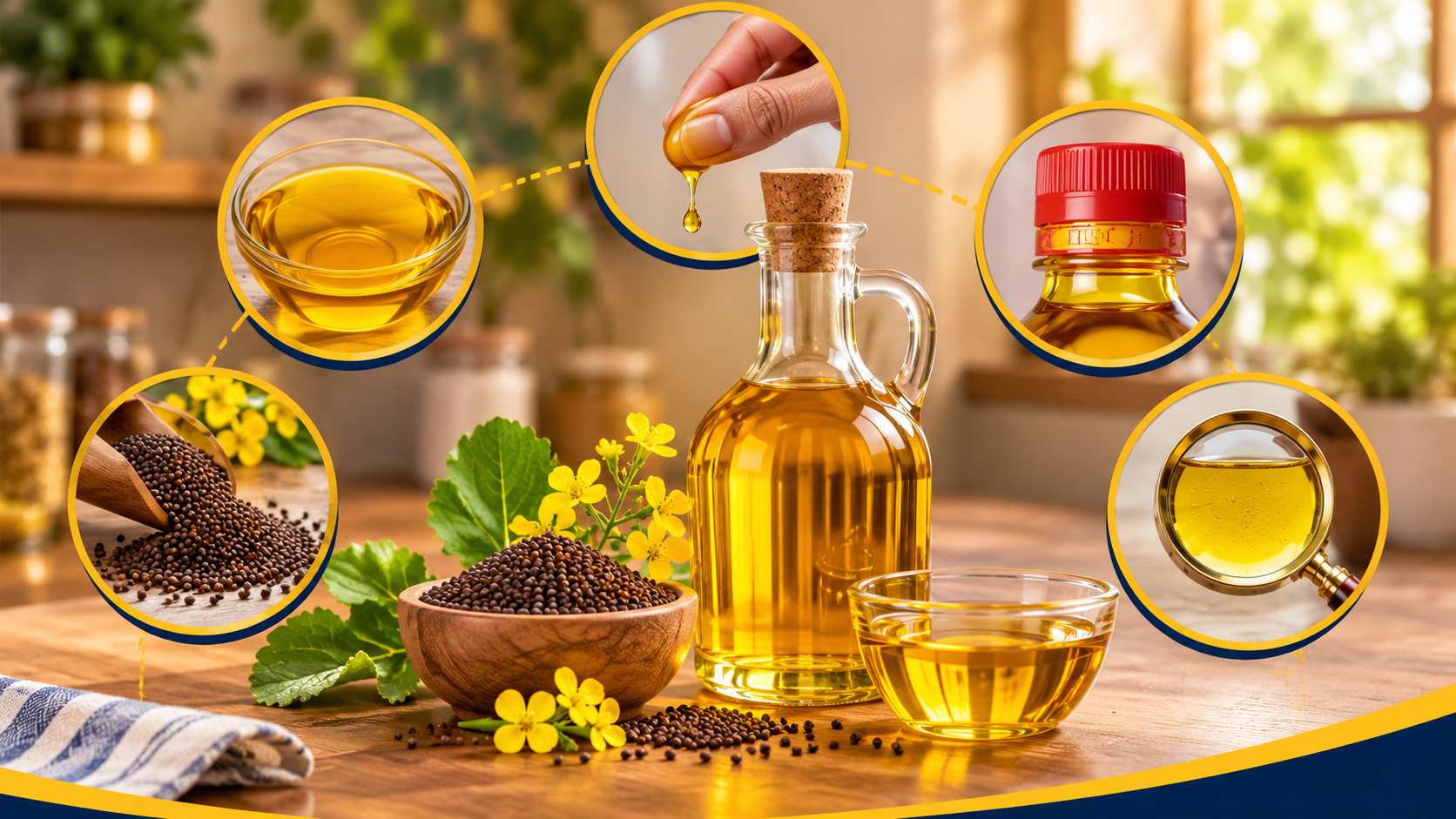
Check the label for manufacturer and FSSAI details, the aroma and colour of the oil, the seal and packing, and the reputation of the brand. Home tests are only indicative; a lab test is the reliable way to confirm purity.
1. Read the label carefully
A genuine product shows the brand, manufacturer or packer details, FSSAI licence number, net quantity, MRP, batch number and best-before date. Avoid unlabelled or loosely packed oil whose source you cannot trace.
2. Check the aroma
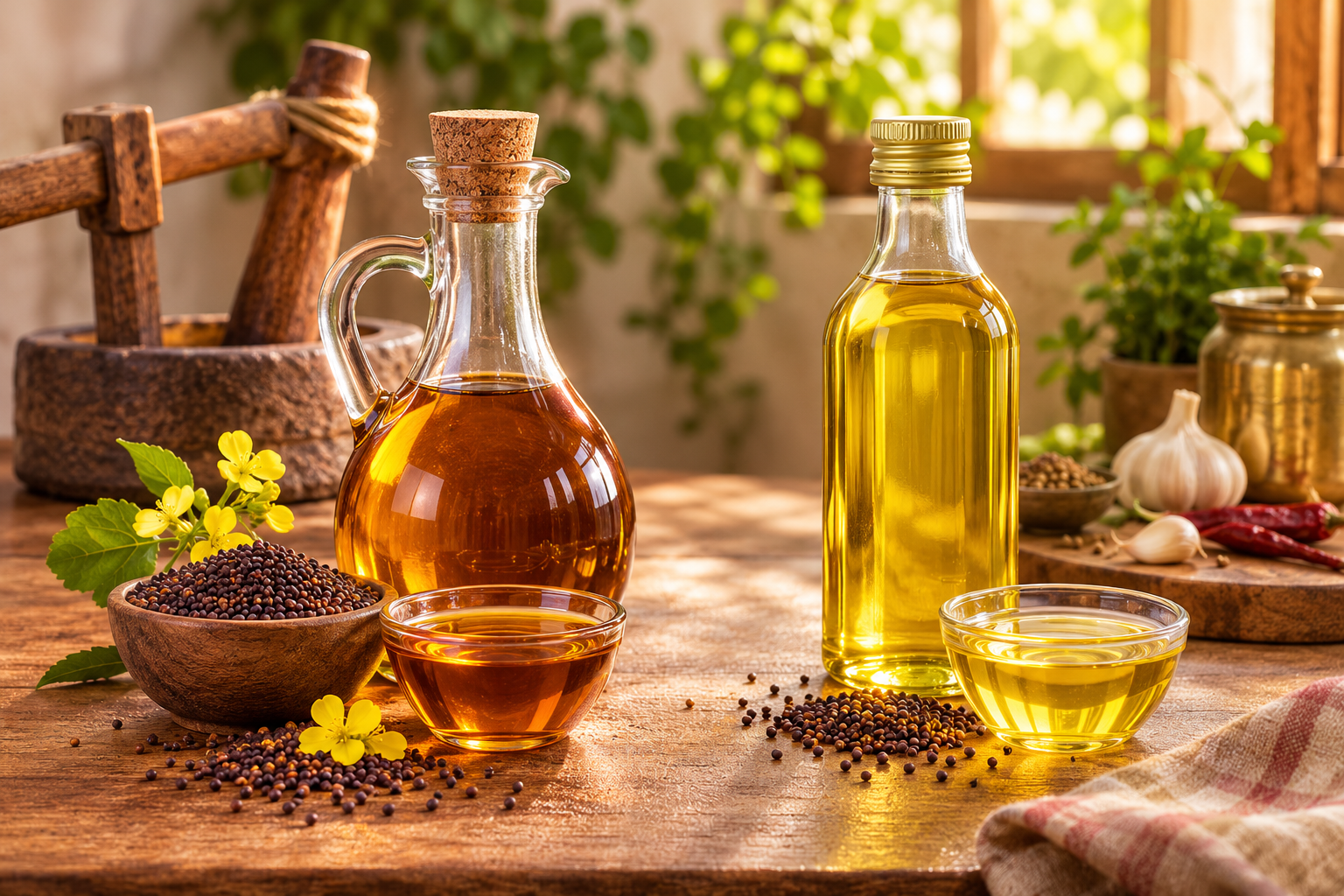
Kachi ghani mustard oil has a sharp, pungent smell that you can notice as soon as you open the pack. A very weak or unusual smell is worth questioning.
3. Look at colour and clarity
Good oil is clean and clear, usually a golden-yellow shade, without floating particles or a cloudy look. Colour varies a little between brands and seasons, so use this as a guide, not a final test.
4. Inspect the seal and packing
The pack should be clean, sealed and free from leaks or damage. Tamper-proof seals and food-grade packing help keep the oil safe until you open it.
5. Buy from a trusted brand or supplier
Choose brands that clearly show who makes the oil and where. Manufacturers with their own unit are easier to trace. You can read more about how kachi ghani oil is made and see our product range.
A word about home purity tests
Many “quick tests” shared online, such as freezing the oil or checking how it spreads, are not reliable. They cannot confirm purity on their own. If purity is a serious concern, such as for a business purchase, a laboratory test is the only dependable method.