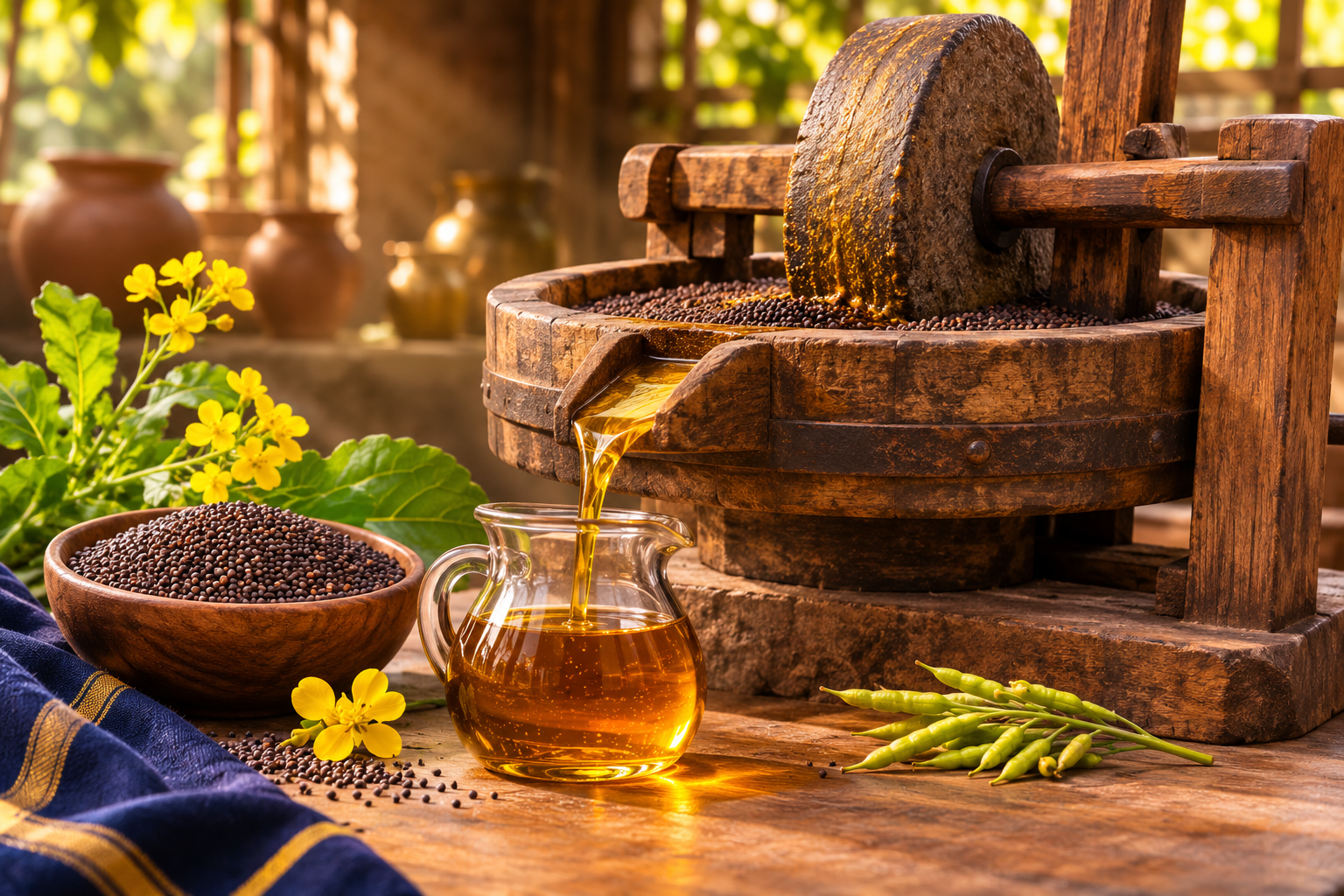
Kachi ghani is the traditional way of slowly pressing mustard seeds in a ghani (press) to extract oil. Because the seeds are pressed without much heat, the oil keeps its deep colour, sharp aroma and bold taste.
What does kachi ghani mean?
Kachi ghani is the traditional Indian method of extracting oil by pressing mustard seeds in a slow-turning wooden or steel press called a ghani. “Kachi” refers to the raw, unrefined state of the oil, and “ghani” is the press itself.
Because the seeds are pressed slowly, the oil is not exposed to very high heat. That is why it keeps its deep colour, sharp aroma and bold taste.
How kachi ghani mustard oil is made
The basic steps are simple:
- Mustard seeds are cleaned to remove dust, stones and broken seeds.
- Clean seeds are fed into the ghani and pressed slowly.
- The extracted oil is left to settle and is filtered in stages.
- The finished oil is filled and sealed in clean, hygienic packs.
Why does mustard oil smell so strong?
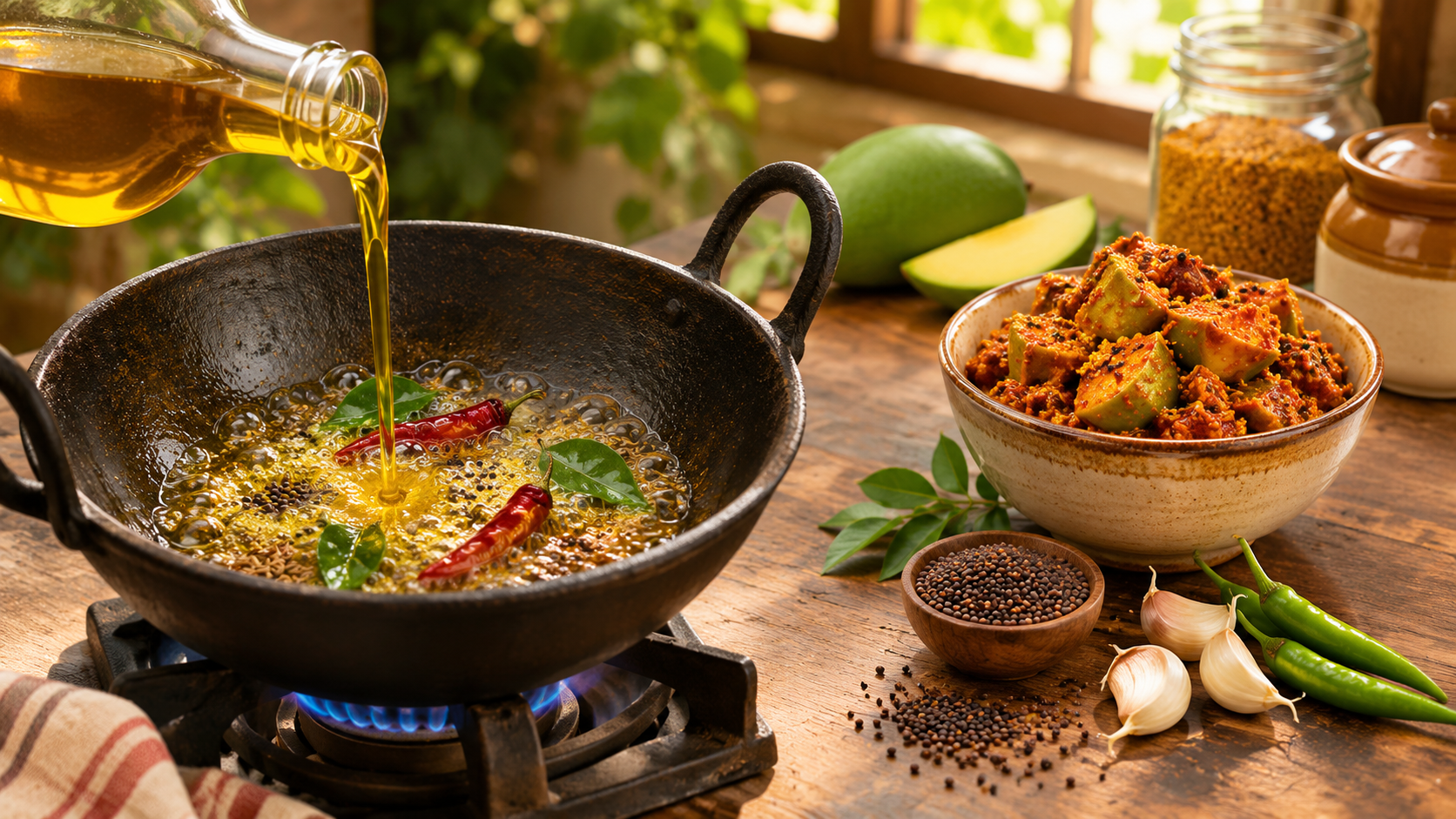
The pungent aroma and sharp bite come from natural compounds in mustard seeds. Many Indian recipes begin by heating the oil until it just starts to smoke, which softens that raw sharpness and gives a milder, nuttier flavour before the other ingredients go in.
How to use kachi ghani mustard oil
Mustard oil is a staple across many regional cuisines:
- Tadka and tempering for dal, kadhi and vegetables
- Pickles such as mango, lemon and mixed vegetable
- Shallow and deep frying of snacks
- Traditional dishes from Rajasthan, Punjab, Bengal and Bihar
How to choose a good kachi ghani oil
Look for a clear label with brand and manufacturer details, an intact seal and a natural, pungent aroma. Pack size matters too, so check our mustard oil range for options from 200 ml to 5 litres, or read our guide on how to identify pure mustard oil.